
How to Decode a GMC VIN and Reveal Trim, Engine, and Towing Capacity
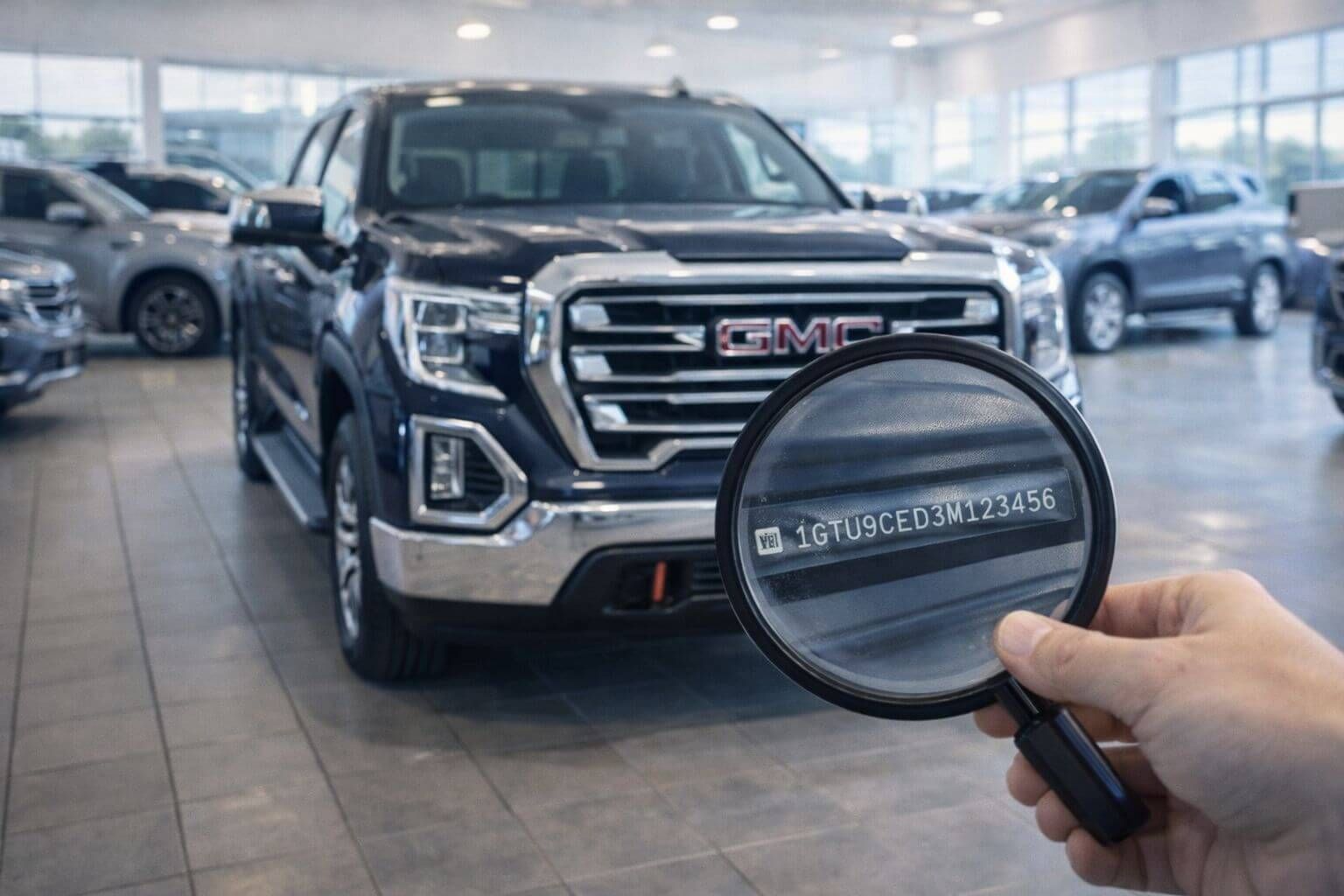
If you’re buying a used GMC truck or SUV, one of the smartest things you can do is decode the VIN. GMC offers a wide range of trims, engines, drivetrains, and towing packages—and listings don’t always reflect the exact factory build.
A Sierra 1500 SLT can look almost identical to an SLE. A Yukon might be advertised with the “right towing setup.” And rarer powertrains—like certain diesel configurations—can be misidentified in rushed listings. The 17-digit VIN helps you confirm what the vehicle actually is before you commit.
The best part? You don’t need to visit a dealership or dig through brochures. With a simple 17-digit code, you can reveal how the vehicle was built at the factory—fast.
What Is a VIN and Where Can You Find It?
A Vehicle Identification Number (VIN) is a 17-character code assigned to every vehicle by the manufacturer. Think of it as your vehicle’s fingerprint—no two are alike.
You’ll find the VIN in several places:
- On the dashboard (driver’s side, visible through the windshield)
- Inside the driver’s door jamb
- On the title, registration, or insurance card
Once you have the VIN, decoding it can reveal the vehicle’s core specs and confirm its factory configuration.
Why Decoding a GMC VIN Matters for Buyers
Not all GMC models are built the same—especially trucks and work-ready SUVs. Two vehicles that look nearly identical from the outside can have different capabilities and resale values.
For example:
- A Sierra 1500 SLT may look similar to an SLE but have a very different towing capacity.
- A Yukon Denali might advertise a certain engine, but only a VIN check can confirm it.
- A Canyon with a diesel engine can be rarer—and more valuable—than a gas version.
Decoding the VIN gives you confidence and clarity before you make a deal.
Use Our Free GMC VIN Decoder to See Exactly How Your Truck Was Built
Instead of guessing or relying on vague listings, run a free VIN lookup to get a detailed breakdown of:
- Trim level (e.g., Elevation, SLT, AT4, Denali)
- Engine type and displacement
- Transmission (6-speed, 8-speed, or 10-speed)
- Drivetrain (4WD, RWD, AWD)
- Towing capacity (when paired with the correct equipment)
- Gross vehicle weight rating (GVWR)
- Exterior and interior color
- Wheelbase and axle ratios
🔎 Check your GMC VIN in seconds with our free decoder to compare listings side by side, validate key options, and spot mismatched claims before you negotiate.
How to Decode a GMC VIN Step-by-Step
You can interpret a VIN manually, but a decoder is the quickest way to translate the code into a clean, buyer-friendly spec sheet. Here’s how the VIN is typically structured:
1. World Manufacturer Identifier (Characters 1–3)
Identifies the manufacturer and production region.
2. Vehicle Descriptor Section (Characters 4–8)
Commonly reveals:
- Body style
- Engine family
- Safety/restraint systems
- Series/model attributes
3. Check Digit (Character 9)
- Validates the VIN but doesn’t reveal features
4. Model Year (Character 10)
5. Assembly Plant (Character 11)
6. Serial Number (Characters 12–17)
- Unique to each vehicle
Rather than decoding this manually, a tool can instantly translate the VIN into a user-friendly breakdown you can trust while shopping.
Key Features to Confirm in Your GMC VIN Lookup
Trim Level
Trims like SLT, Denali, AT4, and Elevation can differ significantly in features, factory equipment, and resale value. Confirming the trim helps you avoid overpaying for a lower-spec model.
Engine and Transmission
Some GMC trucks and SUVs offer optional diesel engines and upgraded transmissions. A VIN lookup helps confirm exactly what was installed from the factory.
Drivetrain
4WD and AWD are major value factors. A VIN lookup verifies whether the vehicle is rear-wheel drive, four-wheel drive, or all-wheel drive depending on the model.
Towing and Payload-Related Specs
When towing really matters, the details matter more than the badge. The VIN can help surface key towing-related configuration details such as:
These are essential if you plan to haul trailers, boats, or heavy gear.
Package Options
VIN decoding can also indicate whether the vehicle came with certain factory packages—depending on the level of data available—such as:
- Z71 Off-Road Package
- Max Trailering Package
- ProGrade Trailering System
- Luxury or Technology packages
Who Benefits from a GMC VIN Check?
Frequently Asked Questions
Can a VIN tell me if my GMC has a tow package?
Yes. If the Max Trailering or Towing Package was installed from the factory, it may appear in the decoded specs depending on the data source.
What if the seller doesn’t want to share the VIN?
That’s a red flag. Every vehicle has a public VIN visible on the dash. A seller should not withhold it.
Does the VIN show upgrades like a spray-in bedliner or lift kit?
No. The VIN only reflects factory-installed features—not aftermarket modifications.
Can I check GMC SUVs like the Yukon or Acadia?
Absolutely. The VIN decoding process works for all GMC models—including SUVs, crossovers, and vans.
Is this different from a full history report?
Yes. A VIN spec decoder shows factory configuration, while a history report shows accidents, owners, and title issues. We recommend running both.
Final Thoughts
Before you buy that used Sierra, Canyon, or Yukon, take a few minutes to confirm the specs with a free GMC VIN lookup. Knowing the exact trim, engine, drivetrain, and towing-related configuration gives you negotiating power—and peace of mind.
Don’t rely on assumptions or generic listings. Verify the build, confirm the capability, and buy with confidence.
✅ Run a free GMC VIN check now and see the factory details that can save you thousands—it’s fast, free, and one of the smartest steps you can take before buying or selling a GMC vehicle.
About the Author
Chris “Wrench” Dawson
Chris Dawson, known by his customers simply as “Wrench,” is a mobile mechanic who specializes in pre-purchase inspections. He’s crawled under countless used cars in driveways, parking lots, and dealer lots, checking for leaks, frame damage, and lazy repairs. On VinCheckPro.com, Chris shares practical checklists and real-world stories so buyers know exactly what to look, listen, and feel for before buying.