
VIN vs. License Plate: Which is Better for Checking Car Value?
In the world of used car buying and ownership, accurately determining a vehicle's value is crucial. Whether you're purchasing a used car or evaluating the worth of your current vehicle, knowing its value helps you set a fair asking price, negotiate confidently, and avoid overpaying. Two common ways to start this process are by using the Vehicle Identification Number (VIN) or the license plate.
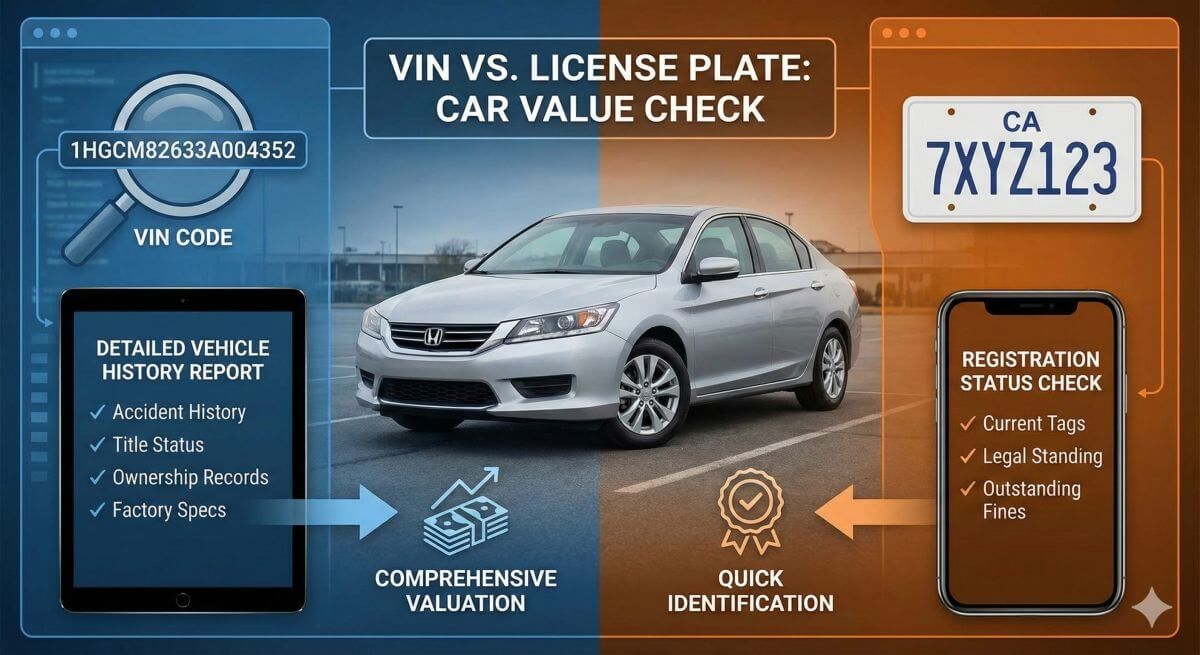
Both methods can tell you something about a vehicle, but they don’t provide the same depth of insight. VIN-based checks are designed to unlock detailed specifications and history, while license plate checks are more focused on registration and legal status. If you are already familiar with VIN checking, it’s important to understand how VIN-based reports can give you a more complete picture of a car’s value than a simple plate lookup.
While both VIN and license plate checks offer insights into a vehicle's background, they serve different purposes and provide varying levels of detail. By comparing these methods, you can determine which is more suitable for your specific needs. This guide will help you compare VIN and license plate checks so you can choose the better option for evaluating car value and avoiding risky purchases.
Understanding VIN and License Plate Checks
The Vehicle Identification Number (VIN) is a unique 17-character code assigned to every vehicle. It serves as the car’s fingerprint and stays with the vehicle for its entire life. A VIN can reveal:
- Make, model, and model year
- Engine and transmission type
- Manufacturing plant and production details
- Trim level and factory-installed options
By contrast, a license plate is a set of alphanumeric characters assigned to a vehicle when it is registered with the state. The plate is tied to the vehicle’s record in the DMV database and is mainly used for:
- Legal identification on the road
- Registration status and expiration
- Linking the vehicle to the current registered owner
In short, the VIN is vehicle-centric (focused on the car itself), while the license plate is registration-centric (focused on the legal status and current registration).
Advantages of VIN Checks
VIN checks are the stronger option when your goal is to understand true vehicle value, because they reveal what has happened to the car over time.
VIN checks can show prior accidents, flood or salvage records, title brands, mileage issues, and open recalls. These details directly affect market value and help you spot red flags before you commit to a purchase.
By decoding a VIN, you can see key specs such as engine size, drivetrain, transmission type, safety features, and factory options. This helps verify that the vehicle matches the seller’s description and that you’re comparing it fairly to similar listings.
A VIN-based report can reveal the number of previous owners, changes in ownership across states, and issues such as theft records or liens. These details can impact both what the car is worth and how easy it will be to register or resell.
Because VIN-based checks connect history, specs, and title data in one place, they provide a much clearer foundation for estimating what the vehicle should be worth today.
Benefits of License Plate Checks
License plate checks still play a useful role, especially when you only have access to the plate (for example, when viewing a car in a parking lot or a listing photo).
A license plate check can quickly pull up the corresponding VIN and some high-level vehicle details. This makes it a convenient starting point when you don’t have the VIN written down yet.
Plate-based lookups can help confirm whether a vehicle’s registration is valid, suspended, or expired, and whether there are known legal issues (for example, certain unpaid fees or flags, depending on the state).
However, a license plate check alone will rarely provide the full accident, title, and ownership history you need to confidently assess value. For that, you’ll still need a VIN-based report.
VIN vs. License Plate for Car Value: Which Should You Use?
When your main goal is checking car value, VIN-based checks are almost always the better choice:
- Market value is heavily influenced by hidden history—accidents, flood damage, branded titles, odometer issues—not just the fact that the vehicle is currently registered.
A simple way to think about it:
If you’re comparing two used cars with similar mileage and asking prices, the one with a clean VIN history (no major accidents, consistent mileage, no salvage or flood) will almost always be more valuable than a car with a problem-filled history—even if their license plate records look the same.
Why VIN-Based Checks Are More Reliable for Valuation
When it comes to assessing car value, VIN-based checks provide a more reliable and detailed picture than license plate checks. The comprehensive nature of VIN data allows buyers and owners to make informed decisions by understanding the full scope of a vehicle's history and specifications. This depth of information is particularly useful for:
- Determining whether the asking price is reasonable
- Evaluating if prior damage or title issues justify negotiating a lower offer
- Comparing similar vehicles in your area based on real condition, not just mileage and model year
For anyone buying, selling, or trading in a car, relying only on surface-level details (like plate status or odometer reading) leaves you vulnerable to surprises. A VIN check fills in the gaps so you can treat the vehicle like an asset with a clear history—not a mystery.
How VIN Decoder Tools Enhance the Process
VIN decoder tools are essential for extracting detailed information from the VIN and turning it into something you can quickly understand. A good decoder can reveal:
- Manufacturing details (plant, production sequence, build date)
- Trim level, engine, transmission, and drivetrain
- Safety features and options that may increase value (advanced safety tech, premium audio, upgraded interior, etc.)
By using a reliable VIN decoder, you can confirm that the vehicle’s equipment and trim match what the seller is advertising, which directly affects the price you should be willing to pay.
For an accurate and free VIN decoding experience, consider using VinCheckPro's VIN decoder. This tool provides detailed reports that can aid in evaluating a vehicle's worth, helping you make informed decisions whether you're buying, selling, or simply tracking your car’s value over time.
If you are still early in the research process or working with state records, you can also start with a DMV VIN check to better understand how the vehicle appears in official databases before you move forward.
When a License Plate Check Is Still Useful
Even though VIN checks are better for value, license plate checks still have their place in your research workflow:
You can run a plate lookup to obtain the VIN and then follow up with a full VIN check.
This can help you avoid vehicles with obvious registration problems or red flags before you spend time or money on a full report.
Think of a license plate check as your entry point, with the VIN check being the deeper dive you rely on for pricing and final decisions.
Putting It All Together: A Simple Workflow
Here’s a practical way to combine both methods when checking car value:
Use a trusted provider like VinCheckPro to review history, title records, recalls, and key specs.
Look for major accidents, branded titles, theft or recovery records, and mileage inconsistencies that may justify a lower value.
If the VIN report reveals serious issues, you can either negotiate a significant price reduction or move on to a safer option.
By following this simple flow, you get the best of both worlds: the convenience of license plate lookups and the depth of VIN-based valuation.
Frequently Asked Questions (FAQ)
What is the main difference between VIN and license plate checks?
VIN checks provide comprehensive vehicle history and specifications, while license plate checks mainly verify registration status and basic legal standing. For pricing and value decisions, VIN checks are far more informative.
Can a license plate check provide vehicle history?
In most cases, no. License plate checks typically do not include detailed vehicle history such as accidents, title brands, or ownership records. For that information, a VIN check or full vehicle history report is required.
Is a VIN check more accurate than a license plate check for value?
Yes. VIN checks are generally more accurate for assessing car value because they combine specifications and history data—such as accidents, odometer issues, and title brands—that directly affect what a vehicle is really worth.
How can I perform a VIN check?
You can perform a VIN check by using online tools like VinCheckPro's free VIN decoder, which provides detailed information on a vehicle's history and specifications. This is a fast way to validate a car before you buy or sell.
Are VIN checks necessary for buying a used car?
Yes, VIN checks are highly recommended when buying a used car. They reveal important details about the vehicle's past—such as accidents, title problems, and recalls—so you can make an informed decision and avoid overpaying for a risky vehicle.
Final Thoughts: VIN vs. License Plate for Checking Car Value
If your main goal is to understand what a car is really worth, the VIN should be your primary tool. License plate checks are helpful for quick identification and basic registration status, but they do not provide the depth of information needed for serious valuation.
Before you commit to a used car or finalize a trade-in, take a few minutes to run a full VIN check with a trusted provider like VinCheckPro. Combining a quick plate lookup with a detailed VIN report gives you the confidence to negotiate smarter, avoid costly surprises, and choose the vehicle that offers the best value for your money.
About the Author
Jake Turner
Jake Turner is an ASE-certified master mechanic with over 18 years in independent shops and dealership service bays. He’s inspected thousands of used cars, from budget commuters to ex-fleet workhorses, and has a knack for spotting issues that never show up in glossy ads. On VinCheckPro.com, Jake explains how to connect what you see in a VIN report with what you should check under the hood, on the lift, and during a test drive.