
Can You Look Up a License Plate Owner in California?
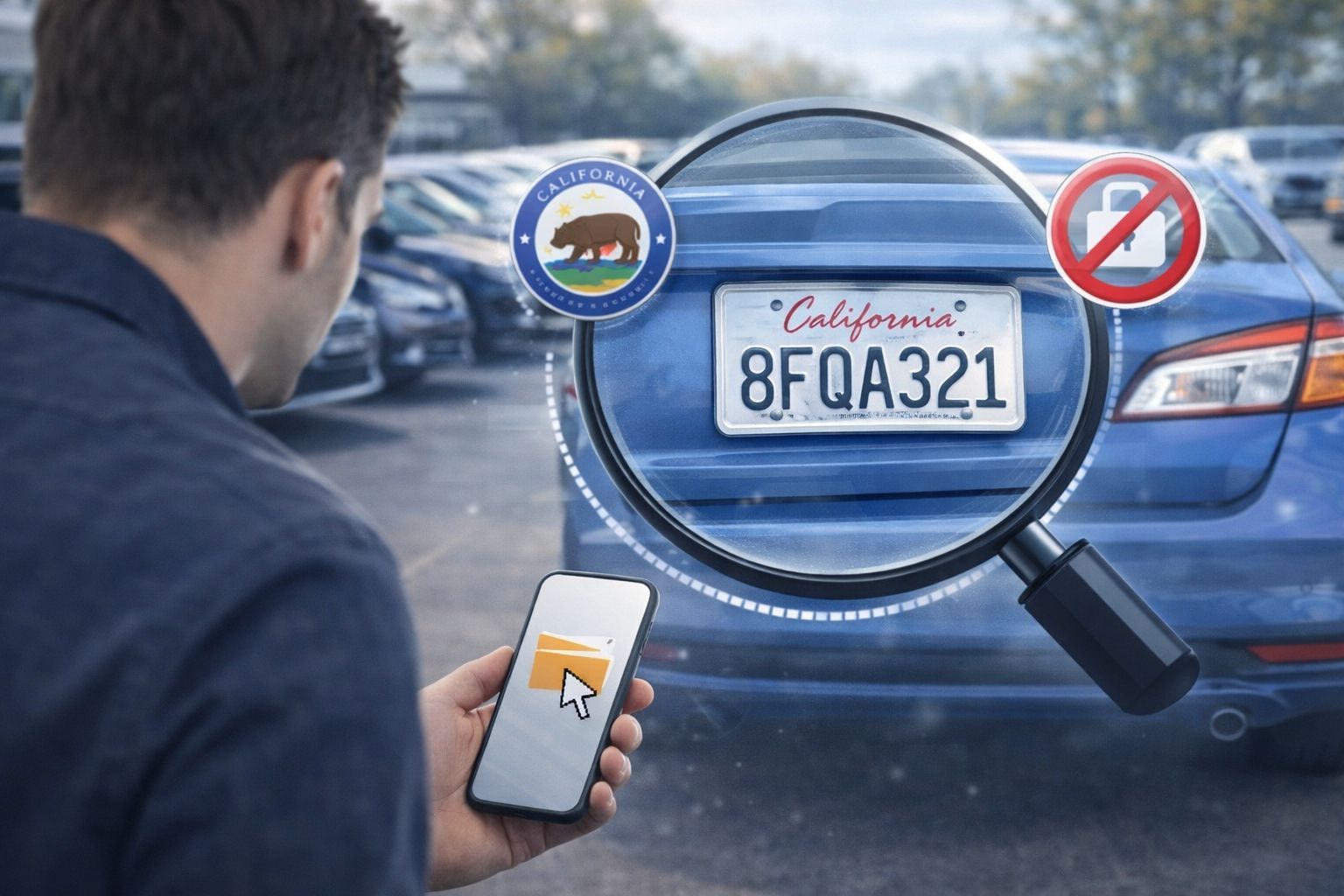
Can You Look Up a License Plate Owner in California?
When buying a used vehicle in California, doing your due diligence is essential. One of the most common questions buyers ask is whether it’s possible to look up a license plate owner in California. This question often comes up when verifying ownership, checking legitimacy, or uncovering a vehicle’s past.
While California has strict privacy laws, understanding how a California plate owner search actually works can protect you from fraud, title issues, and misrepresented vehicles. For broader vehicle research, combining plate data with a search VIN tool can give you a clearer picture of a car’s specifications, history, and potential red flags.
Understanding California Plate Owner Search Laws
In California, access to personal vehicle owner information is heavily regulated under state and federal privacy laws. The California Department of Motor Vehicles (DMV) maintains license plate and registration records, but this information is not publicly accessible.
These restrictions exist to protect individuals from misuse of personal data, identity theft, and harassment. As a result, everyday car buyers cannot directly retrieve an owner’s name or address using a license plate number alone.
That said, there are legal and legitimate ways to obtain vehicle-related information without violating privacy laws.
Who Can Legally Access License Plate Owner Information?
Only specific entities with a legally permitted purpose may access protected license plate data in California:
For private buyers, this means personal details are off-limits — but vehicle history and status information is still accessible through approved channels.
How to Research a Vehicle Using a California License Plate
Even without direct access to owner identity, you can still gather valuable information linked to a California plate using the following steps:
Many online services allow you to generate a vehicle history report using the license plate number. These reports can reveal accident records, title branding, odometer readings, and ownership patterns.
If you can obtain the VIN, a VIN decoder provides detailed insights into the vehicle’s make, model, engine type, manufacturing origin, recalls, and reported incidents.
In limited cases involving legal disputes, abandoned vehicles, or insurance matters, the DMV may release certain information upon proper request and documentation.
License Plate Lookup vs VIN Decoding: What’s the Difference?
A license plate lookup and VIN decoding serve different but complementary purposes.
A license plate lookup can help you:
- Confirm basic vehicle identity
- Check registration status
- Identify potential title or accident history
A VIN decoder goes deeper by revealing:
- Engine, transmission, and trim specifications
- Manufacturing year and plant
- Accident, salvage, and title branding
- Recall history and service records
Using both a free license plate lookup california and VIN decoding together gives you a much stronger foundation when evaluating a used car.
Frequently Asked Questions
Can I find a vehicle owner’s name from a license plate in California?
No. Due to strict privacy regulations, personal owner information such as name or address is not available to the public through license plate searches in California.
What information can a California license plate lookup provide?
A plate lookup can reveal vehicle details such as make, model, year, registration status, and sometimes a summarized vehicle history — but not personal owner data.
Is it legal to use online license plate lookup tools?
Yes. It is legal to use online lookup tools as long as they comply with privacy laws and do not disclose restricted personal information.
How can I verify a used car before buying it?
Use a combination of a VIN decoder, license plate lookup, and a full vehicle history report to identify accidents, title issues, recalls, and inconsistencies.
What should I do if I suspect fraud or false vehicle information?
If you suspect fraud, stop the transaction and contact local authorities, the DMV, or a legal professional for guidance before proceeding.
By understanding California’s privacy laws and using the right research tools, you can confidently evaluate a used vehicle without crossing legal boundaries — and avoid costly surprises.
About the Author
Jake Turner
Jake Turner is an ASE-certified master mechanic with over 18 years in independent shops and dealership service bays. He’s inspected thousands of used cars, from budget commuters to ex-fleet workhorses, and has a knack for spotting issues that never show up in glossy ads. On VinCheckPro.com, Jake explains how to connect what you see in a VIN report with what you should check under the hood, on the lift, and during a test drive.